

Sustainable Transport Roadmap
Under the Green Agenda for the Western Balkans, Sustainable Transport supports the transition towards a low-emission, climate-resilient and better-integrated regional transport system, in alignment with the EU transport acquis. It contributes to decarbonisation objectives by promoting cleaner transport modes, strengthening regional connectivity and advancing policy convergence with EU transport and energy frameworks.
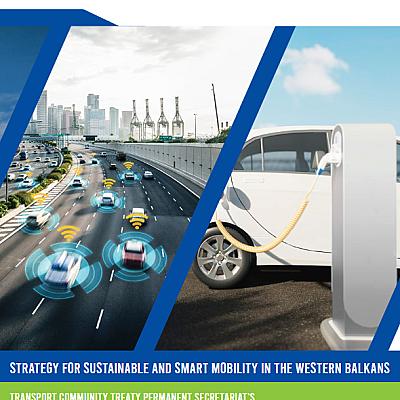
In the Green Agenda Action Plan (2021–2030), this Pillar focuses on alignment with the EU transport acquis, development of alternative fuel infrastructure, preparation and implementation of Sustainable Urban Mobility Plans (SUMPs), digitalisation of transport systems, and improvement of road safety, in line with the Smart and Sustainable Mobility Strategy.
The Revised Action Plan (2025–2030) maintains these priorities while placing stronger emphasis on implementation and measurable delivery. The overall objective remains the reduction of transport-related greenhouse gas emissions, the improvement of air quality, the enhancement of transport system efficiency, and the further integration of the Western Balkans Six (WB6) into EU transport and energy markets.
REGIONAL PROGRESS OVERVIEW
The analysis presented below is based on the Report on the Implementation of the Green Agenda for the Western Balkans Action Plan (GARI), which serves as the primary regional monitoring instrument for tracking the implementation of the Green Agenda for the Western Balkans Action Plan (GAWB AP). GARI consolidates data from regional coordinators under GAWB AP – Energy Community, Transport Community, Standing Working Group on Rural Development, International Union for Conservation of Nature, , EU-aligned reporting frameworks, and WB6 authorities to provide a structured assessment of progress across actions, policy alignment, and infrastructure development.
According to the GARI 2025, gradual but uneven progress continues across the WB6, supported in several areas by technical assistance, capacity-building and regional coordination facilitated through the Transport Community framework. WB6 transport strategies and policy frameworks are increasingly incorporating the sustainability, digitalisation and resilience objectives of the Sustainable and Smart Mobility Strategy, although progress differs considerably across policy areas and the region.
Further efforts are required to accelerate the transposition and implementation of alternative-fuels legislation, expand electric-vehicle charging networks beyond isolated urban and corridor-based installations, and advance the preparation and implementation of Sustainable Urban Mobility Plans. Continued investment is also needed to strengthen the climate resilience of road, rail and maritime infrastructure and to operationalise resilience action plans and targeted risk-based interventions. Differences in progress across the WB6 are associated with varying levels of infrastructure readiness, regulatory alignment, institutional and technical capacity, access to financing and project-preparation maturity.
ACTIONS
The Observatory integrates selected indicators from the Balkan Barometer 2024 surveys to complement implementation tracking with public and business perceptions data on issues relevant to the Green Agenda.
Business Opinion
Source: Regional Cooperation Council (RCC) (2025) Balkan Barometer 2025: Business Opinion Survey, online database, Indicator “How important are the following factors for your company’s trade relations with other WB6? Transportation costs”.