

Western Balkans Six Biodiversity Strategic Plan 2030
Key Resources
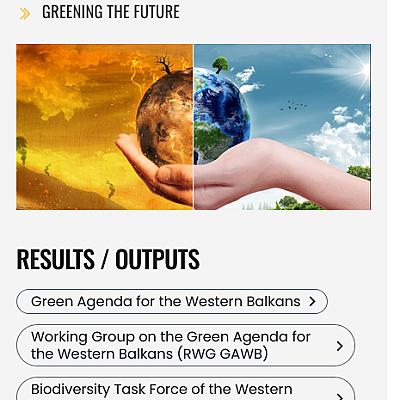
Under the Green Agenda for the Western Balkans (GAWB), Pillar 5 supports the protection and restoration of nature and biodiversity. The Western Balkans Six (WB6) Biodiversity Strategic Plan 2030 is a key instrument under that pillar, developed jointly by the Regional Cooperation Council (RCC) and the International Union for Conservation of Nature (IUCN). It responds to commitments made in the Sofia Declaration on the Green Agenda (2020) and reaffirmed in the Hamburg Declaration (2024), and its vision, mission and strategic goals were endorsed by ministers alongside the Dubrovnik Declaration at the Second Ministerial Meeting on the Green Agenda on 14 October 2025.
The Plan translates the Kunming-Montreal Global Biodiversity Framework under the Convention on Biological Diversity, to which five of the WB6 are Parties, and the European Union (EU) Biodiversity Strategy for 2030 into priorities suited to the region, supporting alignment with Chapter 27 of the EU acquis on environment and climate change. Primary responsibility for implementing biodiversity policies and measures remains with the competent authorities in each of the WB6. The Plan supports those efforts by fostering coordination, promoting common approaches and enabling joint action where this brings clear benefits, strengthening the effectiveness of existing frameworks through better regional alignment and cooperation.
REGIONAL PROGRESS OVERVIEW
The WB6 host exceptionally rich biodiversity, including high levels of endemism and globally important populations of many species. Species across the region are nonetheless increasingly threatened by habitat loss and degradation, overexploitation, pollution, climate change and insufficient conservation measures. The State of Nature assessment 2026 finds that more than 500 species, particularly freshwater fish, molluscs, amphibians, invertebrates and plants, are classified as Vulnerable, Endangered or Critically Endangered on the IUCN Red List of Threatened Species, with declining population trends dominating wherever data are available.
Progress has been made in expanding protected areas, but gaps remain in coverage, ecological representativeness and governance, and conservation action for species remains fragmented, with many species lacking targeted recovery plans or effective monitoring. The Plan also addresses a structural gap: there is currently no formal mechanism in the region for distributing responsibilities or adjusting targets according to the capacities of the WB6, in contrast to the European Union, which supports collective achievement through burden-sharing arrangements, financial instruments and compliance mechanisms.
The Plan is structured in two phases. Phase I, political commitment and strategic direction, sets out the shared vision, mission and five strategic goals endorsed in October 2025. Phase II covers full operationalisation, including prioritisation of actions, identification of regionally coherent and locally relevant targets, and development of measurable indicators. That work is guided by the forthcoming State of Biodiversity Report for the WB6, prepared by IUCN Regional Office for Eastern Europe and Central Asia (ECARO) with the competent authorities and regional partners, and is intended to provide a credible basis for resource mobilisation, implementation and reporting, including under the EU accession process.
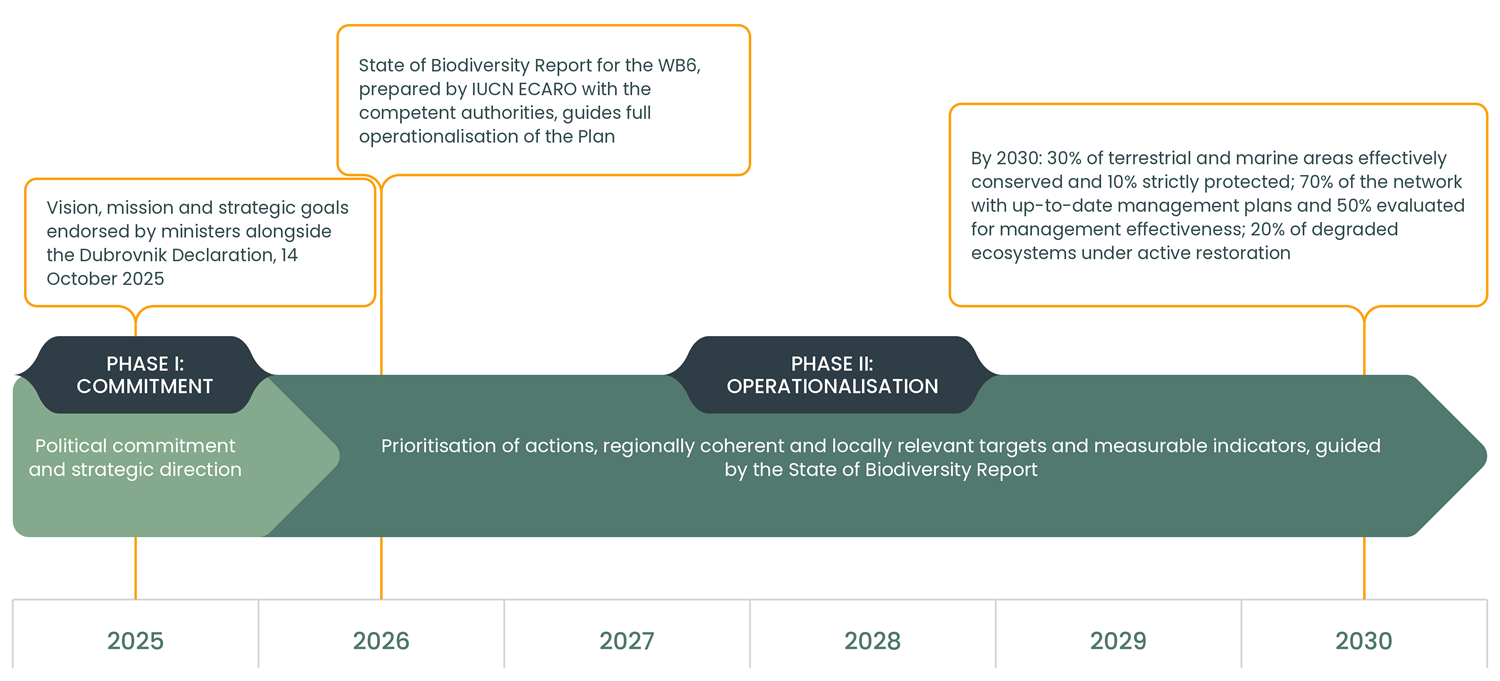
Figure 1. From political commitment to the 2030 targets.
Source: Regional Cooperation Council and IUCN, Western Balkans Six Biodiversity Strategic Plan 2030 (Sarajevo: Regional Cooperation Council, 2025).
The five strategic goals
Regional takeaway: the Plan sets two area-based and restoration goals with quantified 2030 targets, a species goal, and two enabling goals covering sectoral integration and the governance, data and finance needed to deliver them.
| Goal | What it commits the region to |
|---|---|
| Goal 1. Effective, equitable and representative area-based conservation | By 2030, at least 30% of terrestrial, inland water, marine and coastal areas effectively conserved through ecologically representative, well-connected and equitably governed systems of protected areas and other effective area-based conservation measures (OECMs), including at least 10% under strict protection, integrated into wider landscapes and seascapes. |
| Goal 2. Restore and enhance ecosystem integrity and resilience | By 2030, at least 20% of degraded terrestrial, inland water, marine and coastal ecosystems under effective restoration, with restoration measures in place to cover all ecosystems in need of restoration by 2050. |
| Goal 3. Halt species loss and strengthen conservation of endangered species | Prevent extinctions of known threatened species and improve the conservation status and trend of at least 30% of species currently at risk, through species action plans, habitat restoration and stronger protected area networks. |
| Goal 4. Integrate biodiversity into sectors and policies | Biodiversity considerations embedded in policies, planning and investment decisions across agriculture, forestry, energy, water management, spatial planning and infrastructure. |
| Goal 5. Advance biodiversity action through knowledge, governance and finance | Stronger governance, harmonised monitoring and reporting, integrated biodiversity information platforms, and increased technical and financial capacity to enable implementation and credible progress tracking. |
Table 1. The five strategic goals of the Plan.
Source: Regional Cooperation Council and IUCN, Western Balkans Six Biodiversity Strategic Plan 2030 (Sarajevo: Regional Cooperation Council, 2025).
Key targets to 2030
Regional takeaway: the targets move beyond area coverage to the quality of conservation, setting thresholds for management planning, management effectiveness and active restoration, and requiring a harmonised regional approach to how conserved area is counted.
| Target by 2030 | What it requires |
|---|---|
| At least 30% of terrestrial and marine areas effectively conserved | Delivered through protected areas and recognised OECMs, based on a harmonised regional accounting approach and minimum quality standards. |
| At least 10% under recognised strict protection | Focused on ecosystems of high ecological integrity and biodiversity importance. |
| At least 70% of the conserved area network covered by up-to-date management plans | Plans aligned with agreed minimum standards. In addition, at least 50% of the network to have undergone at least one management effectiveness evaluation using recognised methodologies. |
| At least 20% of degraded ecosystems under active restoration | Including detailed baseline assessment, a technical project defining concrete restoration measures based on baseline data and best available knowledge and practice, and implementation on the ground, with special attention to transboundary areas. |
Table 2. Key targets to 2030.
Source: Regional Cooperation Council and IUCN, Western Balkans Six Biodiversity Strategic Plan 2030 (Sarajevo: Regional Cooperation Council, 2025).
RESTORATION PRIORITIES
Within the restoration target, priority is given to:
- freshwater ecosystems, including rivers, wetlands and lakes;
- forest ecosystems;
- grasslands and semi-natural agricultural systems;
- coastal and marine ecosystems;
- effective management of invasive species.
KEY RECOMMENDATIONS
- Adopt a harmonised regional accounting approach for protected areas and recognised OECMs to deliver at least 30% conservation coverage by 2030, including at least 10% under strict protection and minimum quality standards for all designated sites.
- Develop and adopt Nature Restoration Plans aligned with the EU Nature Restoration Regulation by 2028, identifying priority ecosystem types, spatial extent of degradation and measurable restoration targets for each of the WB6.
- Initiate active restoration of at least 20% of degraded ecosystems by 2030, with priority given to freshwater ecosystems, forests, grasslands and semi-natural agricultural systems, coastal and marine ecosystems, and effective management of invasive species, with special attention to transboundary areas.
- Develop and implement species action and recovery plans for regional priority species by 2028, supported by updated Red Lists following IUCN criteria and standardised monitoring systems for threatened, endemic and wide-ranging species.
- Integrate biodiversity, nature-based solutions and ecosystem service considerations into sectoral policies across agriculture, forestry, energy, water management, spatial planning and infrastructure, supported by strengthened environmental assessment instruments.
- Establish an operational and interoperable regional biodiversity information hub by 2030, with harmonised monitoring and reporting frameworks enabling evidence-based decision-making, credible progress tracking and consistent reporting under the EU accession process.