

Action 54a
Report on climate change and biodiversity linkages
ROADMAP PROGRESS
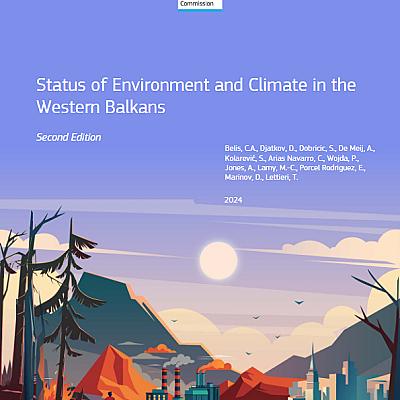
The 2025 GARI reports that the interlinkages between climate change and biodiversity in the WB6 were addressed in two major reports published in the 2024 to 2025 period. The European Commission’s Joint Research Centre published Status of Environment and Climate in the Western Balkans on 13 February 2025, providing a comprehensive overview of environmental and climate conditions across the region and highlighting gaps in alignment with EU policies and the acquis. It found that the WB6 have made progress in aligning with EU environment and climate legislation, including improved monitoring and reporting procedures and a greater focus on emission reduction targets, but that progress has been slow and significant issues remain. The analysis identified the climate and biodiversity nexus as a key area requiring strengthened action, with biodiversity assets facing growing threats from land-use change, climate change, pollution, invasive species and governance challenges, while the compounding effects of climate change place additional pressure on already stressed forest, water and soil ecosystems. This assessment built on the second edition of the same report, published in December 2024, which focused on hydrological aspects, forest fires and heat waves as primary pressure points.
The European Environment Agency launched Europe’s Environment 2025 at a regional event in Podgorica, Montenegro in November 2025, marking two decades of cooperation with the WB6 through the Eionet network. The report includes WB6 profiles, co-created with regional institutions, which record that the WB6 have expanded or improved their networks of protected areas, contributing to both biodiversity conservation and climate change mitigation through the protection of carbon-rich ecosystems, while confirming that significant challenges remain in bridging the gap between expanded designations and effective on-the-ground management. The WB6 Climate Adaptation Roadmap reinforces the climate and biodiversity nexus, noting that Nature-based Solutions, from afforestation and the restoration of forests, wetlands, peatlands and coastal ecosystems through to urban greening and regenerative agricultural practices, deliver significant co-benefits for water quality, soil productivity and biodiversity. It concludes that their integration into policy and project design remains at a relatively early stage across the WB6, is often not fully aligned with the IUCN Standard for Nature-based Solutions and frequently lacks assessment of long-term sustainability and cost-effectiveness, and it calls on the WB6 to adopt a common definition and verification standard, to redirect public financing and donor programming towards Nature-based Solutions as the preferred alternative to grey infrastructure, and to strengthen the regulatory frameworks that facilitate their implementation and the monitoring of their contribution to carbon sequestration.

Note: Action 54a of the first Green Agenda Action Plan (2021–2030), concerning the preparation of a report on climate change and biodiversity linkages, is not retained as a separate action in the Revised Action Plan (2025–2030), as addressed through broader actions that promote nature-based solutions and integrate biodiversity considerations into climate and environmental policy frameworks.