
Action 34
Conclude and implement a regional agreement on the prevention of plastic pollution, including specifically addressing the priority issue of marine litter
ROADMAP PROGRESS
The 2025 GARI reports that marine ecosystems in the WB6 continue to face severe impacts from plastic pollution, a problem rooted primarily in inadequate waste management systems.
Key contributing factors include insufficient waste collection infrastructure, uncontrolled disposal practices, illegal dumping, widespread littering and substandard landfill conditions, which collectively exacerbate the leakage of plastics into the region’s rivers and the Adriatic Sea.
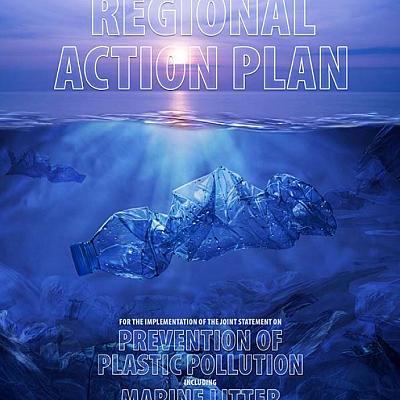
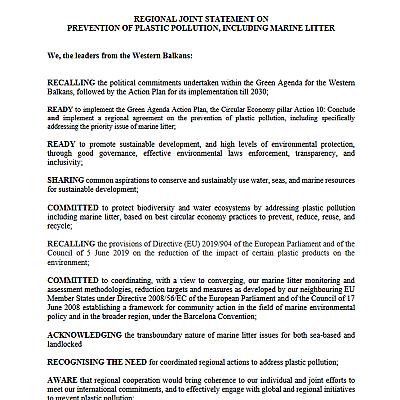
On 14 October 2025, the RCC convened the Second Ministerial Meeting on the Green Agenda for the Western Balkans in Dubrovnik, Croatia. Among the key outcomes was the endorsement of the Regional Action Plan on Prevention of Plastic Pollution, including Marine Litter, which operationalises the 2023 Regional Joint Statement and provides a more operational regional framework for tackling plastic leakage, improving waste management and advancing circular prevention measures across the WB6, with an emphasis on strengthening EPR schemes and exploring funding mechanisms for systematic clean-up operations. Key targets include reducing the availability of the most polluting single-use plastics by 80% by 2028 and ensuring that all plastic packaging contains at least 30% recycled content by 2030. Development and implementation of the Action Plan are coordinated by the RCC through the Regional Working Group on the Green Agenda for the Western Balkans, in collaboration with the European Union and other stakeholders, and effective execution will require both financial and technical resources at local and regional levels. As of 2025, progress in the full transposition and implementation of the Marine Strategy Framework Directive remains limited across the WB6, and the adoption of an ecosystem-based management approach is necessary to ensure the sustainable use of marine resources. Additional regional projects addressing plastic leakage and marine litter, including initiatives under the Adriatic–Ionian framework, contribute to broader efforts to strengthen marine environmental protection.
Multiple programmes and projects are currently addressing marine litter. The Integrated Waste Management and Marine Litter Prevention initiative supports coordinated strategies to reduce plastic leakage, engaging public and private sector entities alongside civil society, and provides technical guidance to minimise plastic waste entering the Adriatic Sea. The AdriPlast project, financed through the EU Interreg VI-B IPA Adriatic-Ionian Programme, held its kick-off meeting in February 2025 and fosters collaboration among Italy, Croatia, Slovenia, Serbia, Montenegro and Albania to devise sustainable solutions for plastic waste reduction. The TETHYS4ADRION project, launched in late 2024 to target riverine plastic pollution in the Adriatic-Ionian region, advanced its monitoring activities in 2025 and has established a coordinated monitoring network at five strategic river sites, including Buna and Bojana rivers in Albania and Montenegro and Neretva river in Croatia and Bosnia and Herzegovina. A workshop in Shkodër, Albania, in November 2025 presented preliminary findings indicating that plastic constitutes approximately 90% of marine litter along the coast of Albania, with significant inputs from the Buna and Drin rivers.
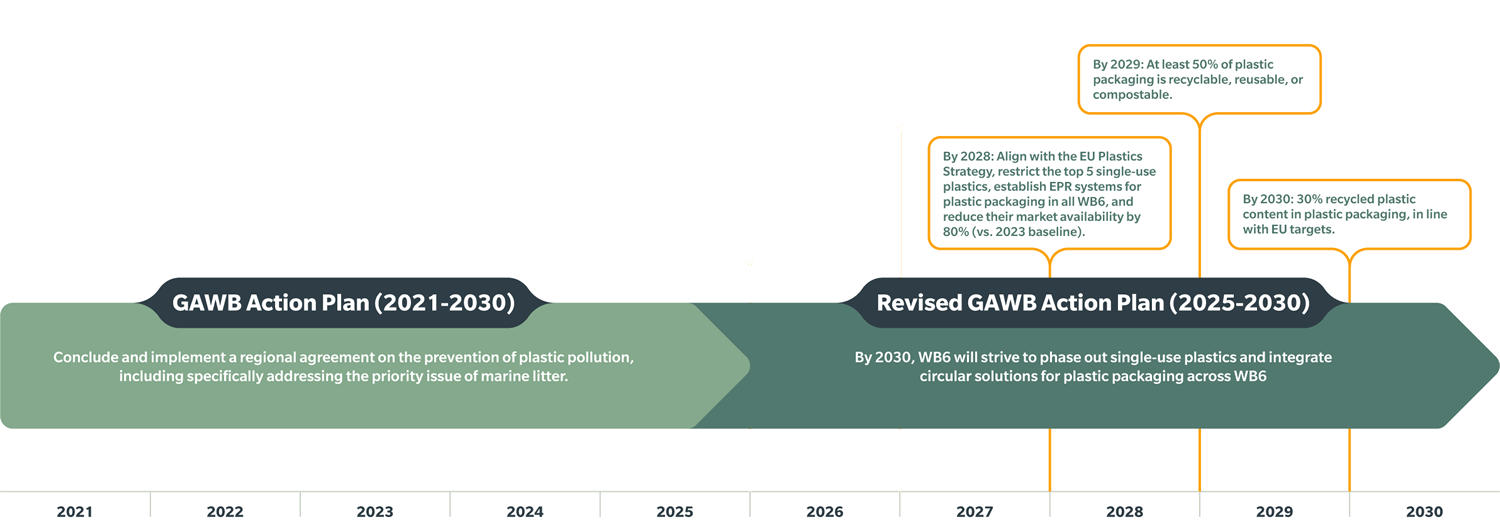
Note: Action 34 of the first Green Agenda Action Plan (2021–2030) is retained in the Revised Action Plan (2025–2030) as Action 22, which focuses on reducing plastic pollution through measures such as phasing out single-use plastics, strengthening extended producer responsibility systems and advancing circular solutions for plastic packaging.