
Action 33
Design and implement consumer-targeted initiatives to raise citizens' awareness of waste prevention, separate collection, and sustainable consumption
ROADMAP PROGRESS
The 2025 GARI reports that public concern over environmental degradation in the WB6 intensified in 2025, with a notable shift in citizen priorities. According to the Balkan Barometer 2025, air and water pollution now dominate public concern, cited by 61% and 52% of respondents, respectively, while direct concern over waste management decreased slightly to 34%, from 37% in 2024. The underlying issues of unsustainable consumption and inadequate waste infrastructure nevertheless remain central to the region’s environmental challenges. The Balkan Barometer 2025 Business Opinion survey also shows that many companies still perceive a lack of consumer demand as a major bottleneck for investing in circular business models, indicating a persistent gap between citizens’ stated environmental concerns and their actual purchasing and consumption behaviour. This growing awareness, combined with a clear policy direction from the EU, has catalysed a range of consumer-targeted initiatives aimed at fostering behavioural change and promoting a circular economy.
At the regional level, 2025 was marked by continued RCC-supported dialogue and awareness-raising efforts on green and circular economy issues, building on existing regional stakeholder platforms and cooperation mechanisms established under the Green Agenda framework, including the development and endorsement of the Regional Action Plan on Prevention of Plastic Pollution, including Marine Litter. The Action Plan operationalises the 2023 Joint Statement by setting out six strategic goals, supported by a comprehensive set of measures and activities aimed at preventing and reducing plastic pollution across marine and freshwater systems through the application of circular economy principles and strengthened alignment with EU legislation. It provides a structured roadmap for improving plastic waste management, reducing single-use plastics and enhancing regional coordination, capacity building and stakeholder engagement to protect ecosystems, biodiversity and livelihoods dependent on clean aquatic environments. Youth engagement remains a cornerstone of regional strategy. The RCC’s Western Balkans Youth Lab (WBYL2) project delivered several practical tools designed to empower young people as agents of change, including the Eco Bonton guide, the Eco Youth Dictionary and the Green Seat Manual in 2025, with the Green Seat Manual aimed at embedding environmental advocacy within Local Youth Councils, and organised targeted workshops in five municipalities in Serbia (Žabari, Kragujevac, Zaječar, Pančevo and Vranje) to train young people in local environmental decision-making. At the WB6 level, initiatives have become more sophisticated, moving from general clean-up campaigns towards targeted, data-driven interventions.
In Montenegro, the domestic environmental campaign “Čuvaj da te čuva” (Protect It, so It Protects You), launched on World Environment Day, brought together the EU Delegation, ministries and civil society organisations in six major clean-up and awareness actions, including the rehabilitation of an illegal landfill at Ćemovsko Polje, and by December 2025 had expanded to include educational programmes in schools focused on environmental crime. These efforts complement policy measures such as the ban on certain single-use plastics, which led to a reported 50% reduction in plastic bag use in its first few months. The Aarhus Caravan in the municipalities of Nikšić, Plužine, Herceg Novi and Ulcinj promoted access to information, public participation in decision-making and access to justice in environmental matters, with a particular focus on waste, waste separation and the circular economy, representing a significant contribution to Montenegro’s European integration process, particularly in the context of fulfilling obligations under Chapter 27 – Environment and Climate Change. Serbia focused on integrating circular economy principles into its business sector with direct EU support: in November 2025 five companies in the textile and food sectors signed cooperation memorandums with the Ministry of Environmental Protection under the EU for the Circular Economy in Serbia project, which provides expert consulting and training to help SMEs develop circular business models, addressing approximately 770,000 tonnes of food and 90,000 tonnes of textile waste discarded annually. The adoption of the Waste Prevention Plan 2025–2030 provides a strategic framework for these and future initiatives.
Albania completed its pilot project for waste separation at source in Berat in October 2025, diverting over 120 tonnes of paper and 8.6 tonnes of plastic for recycling and providing a replicable model as Albania opened negotiations on Chapter 27, although the European Commission noted that urgent action against littering is still needed and that a ban on single-use plastics has not yet been implemented. In North Macedonia, the first Circular Economy Academy, organised by the civil society organisation ARNO, concluded in June 2025, training 12 civil society organisations to develop circular business concepts, providing over 250 hours of mentoring and producing prototypes such as eco-tiles from recycled plastic and sustainable fashion from textile waste. This bottom-up approach is particularly relevant given the European Commission’s 2025 finding that circular economy implementation is stagnating due to limited stakeholder awareness and knowledge. In Kosovo*, preparations continued for a waste prevention framework developed by the Ministry of Environment, Spatial Planning and Infrastructure with support from GIZ. The framework is expected to provide a strategic basis for promoting waste prevention, separate collection, resource efficiency and sustainable consumption, while strengthening public awareness and behavioural change initiatives. The Eco Champions project led by The Balkan Forum organised a series of workshops and the Prishtina Sustainable Design Week, engaging over 400 participants in upcycling and waste-sorting challenges. In February 2025, the project also launched an online questionnaire to gather public input for a comprehensive waste management plan. The Let’s Do It Kosovo* initiative continued its annual clean-up campaigns, mobilising thousands of volunteers for World Cleanup Day on 20 September 2025. These initiatives contribute to raising public awareness of waste prevention, separate collection and sustainable consumption and complement ongoing efforts to strengthen the policy framework for waste prevention and circular economy. They remain particularly important in a context where the number of illegal dumpsites increased by 13.6% in 2025.
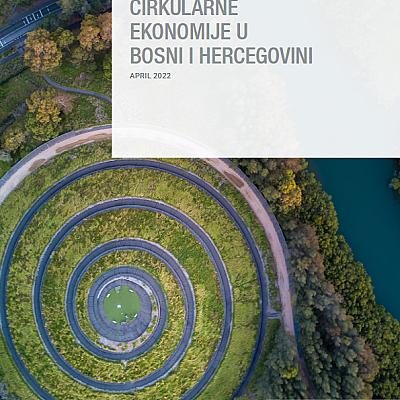
In Bosnia and Herzegovina, although a comprehensive circular economy strategy covering Bosnia and Herzegovina is still lacking, a growing set of grassroots and programmatic initiatives is emerging to fill the gap. The first Repair Café was launched in Mostar, providing a practical, community-based solution to promote product longevity and challenge throwaway culture. At the same time, UNDP has begun to systematise circular economy support through its Green Transition portfolio, including the LOOP circular economy conference in Sarajevo and a Switzerland-financed partnership that promotes circular economy frameworks, institutional capacities and circular business models as part of a broader just green transition. Complementing these efforts, GIZ’s Sustainable Economic Development and Employment Promotion (SEDEP)/EU for Private Sector Development (EU4PSD) programme provides targeted support to MSMEs in adopting greener and more circular business practices, including advisory services, training and pilots combining resource efficiency, digitalisation and competitiveness. Together with the Bosnia and Herzegovina Circular Economy White Paper, which sets out priority areas for legislation, fiscal measures, waste management pricing, green public procurement and awareness-raising, these initiatives provide an increasingly solid foundation for scaling up circular economy action.
A significant gap nevertheless persists between policy ambition and public behaviour. The EPR Policy Brief 2025 highlights that limited public awareness and low household participation in separate collection reduce the quality and volume of collected recyclables, undermining the effectiveness of new policy instruments. Sustained, multi-channel awareness campaigns coupled with the visible and consistent implementation of separate collection infrastructure will be essential to bridge this gap and foster a genuine culture of sustainable consumption across the region.
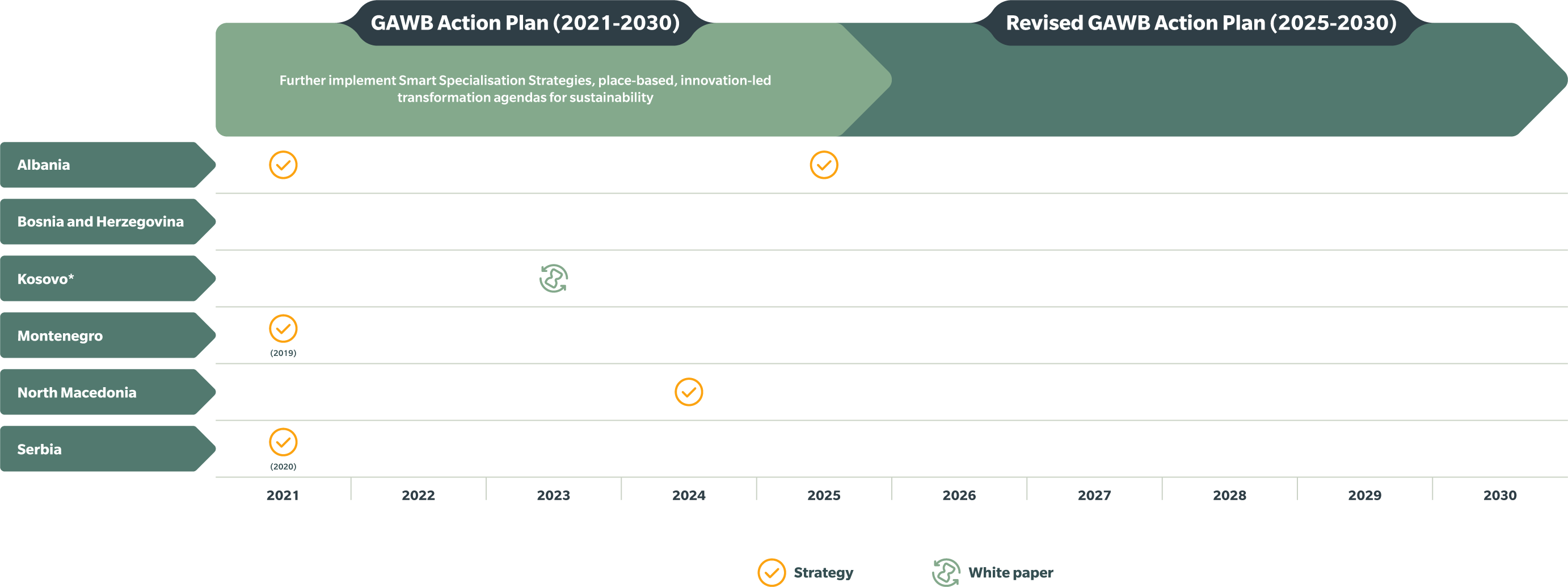
Note: Action 33 of the first Green Agenda Action Plan (2021–2030) is retained in the Revised Action Plan (2025–2030) as Action 21, which focuses on strengthening public awareness and citizen engagement on waste prevention, separate collection and sustainable consumption.
Source: Regional Cooperation Council (RCC) (2025) Balkan Barometer 2025: Public Opinion Survey, online database, Indicator “Are you familiar with the concept of Circular Economy and its principles?”
Source: Regional Cooperation Council (RCC) (2025) Balkan Barometer 2024: Business Opinion Survey, online database, Indicator “Are you familiar with the concept of Circular Economy and its principles?”