

Action 42
Integrate soil protection into other policy areas and establish a regional soil partnership to improve knowledge exchange and identify best practices for soil protection against pollution and degradation
ROADMAP PROGRESS
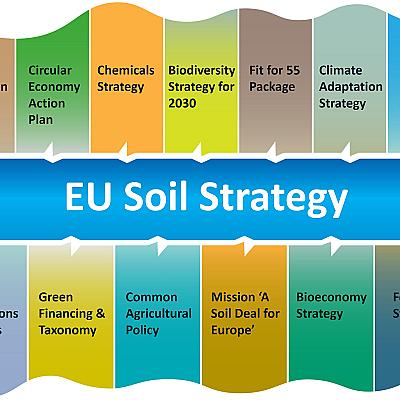
According to the 2025 GARI, soil protection has gained increasing policy attention across the WB6, though soil pollution management remains governed by fragmented legislation embedded in broader environmental, agricultural and land-use laws. At EU level, the Soil Strategy for 2030 is being operationalised through the Soil Monitoring and Resilience Law adopted in September 2025. The Western Balkans Soil Partnership (WBSP), established in 2022, promotes coordinated soil conservation, and the forthcoming LUCAS Soil survey offers an opportunity to standardise regional soil data. EU4Green supports the identification of diffuse soil pollution and contaminated sites, and the European Environment Agency supports the WB6 through the EEA IPA III project (2025); more than 7,000 potentially polluting locations have been recorded across the region. Domestic frameworks remain uneven: Albania and Kosovo* lack dedicated soil protection legislation, Bosnia and Herzegovina lacks such policy in the entity of Federation of Bosnia and Herzegovina while in the entity of Republika Srpska a Law on soil protection is being developed for the first time, and Serbia maintains a Cadastre of Contaminated Sites Information System. Enforcement remains inconsistent and financial and technical capacities for site investigation and remediation remain limited.
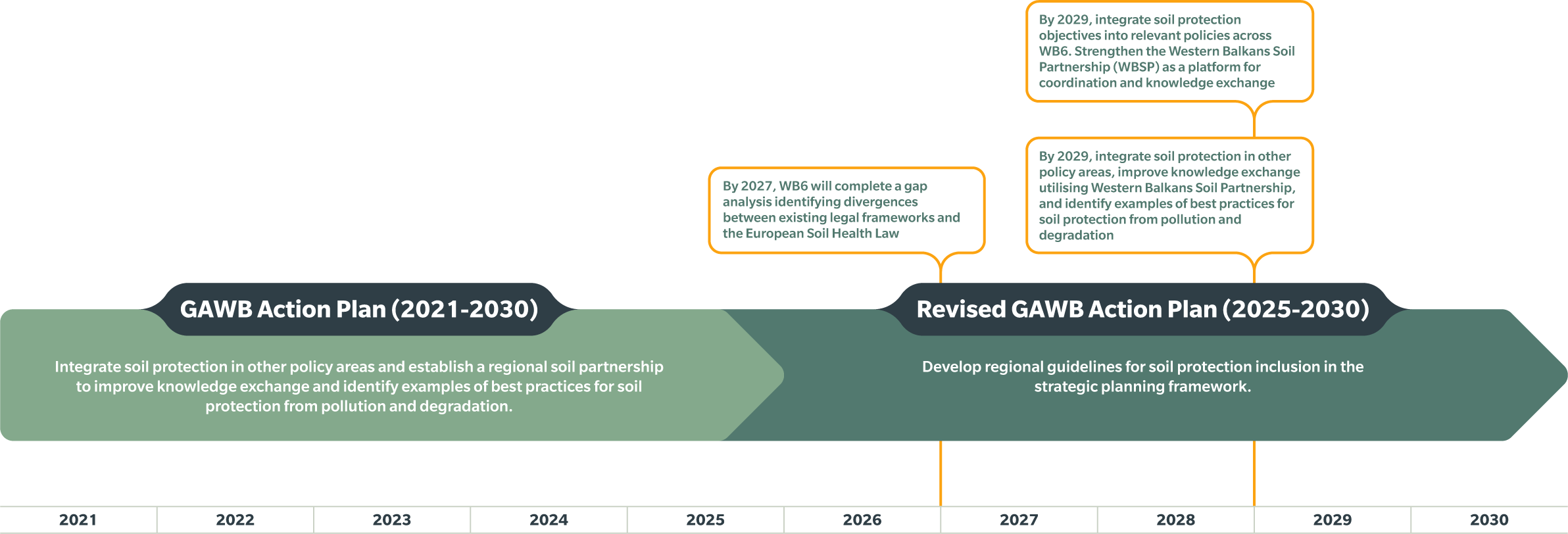
Note: Action 42 of the first Green Agenda Action Plan (2021–2030) is retained in the Revised Action Plan (2025–2030) as Action 28, which focuses on integrating soil protection objectives into relevant policy areas, strengthening the Western Balkans Soil Partnership as a platform for knowledge exchange and coordination, and aligning soil protection frameworks with the EU Soil Health Law.