

WB6 Extended Producer Responsibility Plastic Packaging Framework
Key Resources
Under the Green Agenda for the Western Balkans (GAWB), the Circular Economy pillar supports the shift to circular plastic packaging. The Western Balkans Six (WB6) Extended Producer Responsibility (EPR) Plastic Packaging Framework is the main operational mechanism for delivering these commitments. It responds to Action 19 of the Revised Green Agenda Action Plan (2025–2030) on functional recycling and collection systems, and to Action 22 on reducing single-use plastics (SUP) and increasing recycled content in packaging.
The framework is built on a “harmonised core with domestic flexibility” approach. This approach is designed to maintain alignment with the European Union (EU) acquis, specifically the Waste Framework Directive (WFD), the Single-Use Plastics Directive (SUPD) and the Packaging and Packaging Waste Regulation (PPWR), while allowing implementation to reflect different institutional and market maturity levels across the WB6. It translates policy requirements into a ready-to-use operational toolkit for domestic authorities, including standardised polymer definitions, transparent fee-setting formulas, audit protocols, and model agreements.
THE FRAMEWORK AT A GLANCE
The harmonised core and domestic flexibility
Regional takeaway: the framework harmonises the core elements needed to prevent trade barriers between the WB6, while leaving operational choices that depend on domestic governance to each of the WB6.
| Functional layer | Regionally harmonised core | Domestic flexibility |
|---|---|---|
| Legal and scope | Plastic packaging framework legally aligned with EU PPWR and SUPD definitions, with unified definitions for manufacturers, importers and distributors. | Specific de minimis volume thresholds for administrative relief for small and medium-sized enterprises, and integration choices within broader packaging legislation. |
| Free-rider enforcement | Liability for e-commerce online platforms and mandatory integration of the unique EPR registration token for market entry. | Legal mechanisms for shifting enforcement from individual foreign distance sellers to the marketplace platform. |
| MRV infrastructure | Centralised digital EPR registry architecture with automated multi-agency data triangulation across customs, tax and registry. | Choice of managing agency, for example, the environment ministry, an independent domestically-owned fund or a delegated authority. |
| Market architecture | Cherry-picking prohibited through mandated universal geographical coverage, and a standardised mass-balance reporting methodology. | System design, whether a single non-profit monopoly Producer Responsibility Organisation (PRO) or a competitive multi-PRO market, and decentralised or centralised clearing-house oversight. |
| Fee structures | A cost-coverage mandate of 80% to 100% of true net costs, with core eco-modulation design rules on a bonus and malus basis linked to polymer recyclability and recycled content. | Exact baseline financial parameters, pegged to domestic municipal waste collection operating expenses. |
Table 1. The harmonised core and the domestic flexibility matrix
Source: Regional Cooperation Council, Western Balkans Six (WB6) Extended Producer Responsibility (EPR) Plastic Packaging Framework (Sarajevo: Regional Cooperation Council, 2026).
HOW THE REGIONAL EPR MODEL WORKS
Monitoring, reporting and producer registration
A standardised Monitoring, Reporting and Verification (MRV) system sits at the centre of the proposed model. Anchored by unique EPR identifiers and a harmonised Data Dictionary, the model is designed to reduce administrative burden, eliminate intraregional double-counting and improve data reliability across domestic registries. The model requires a strict legal link between market entry and EPR registration - producers and importers would need a valid and active EPR registration number before placing packaging on the domestic market (WFD Article 8a(5); PPWR Article 44).
Fee architecture and eco-modulation
The fee architecture rests on three pillars. Producer contributions should cover at least 80% of the necessary costs of plastic packaging waste management, in line with the framework’s cost-coverage requirements. Fees are calculated using actual placed-on-market (POM) data, broken down by polymer and packaging format. The model prohibits easily recyclable fractions, such as rigid clear polyethylene terephthalate (PET), from subsidising low-value or difficult-to-recycle fractions such as flexible multi-layer laminates. The model also requires efficiency benchmarks to ensure that producer fees do not subsidise operational inefficiency or suboptimal sorting capacity. Eco-modulated bonus-malus tariffs then reward recyclability and the use of recycled content.
Enforcement, governance and system resilience
Operational stress testing identified five systemic risks to EPR performance in the region: structural underfunding, data gaps, weak enforcement capacity, governance capture, and infrastructure bottlenecks. The diagnostic estimates free-rider rates at 30% to 40% of the market. The framework recommends addressing these risks through the mandatory use of the necessary-cost methodology, standardised inspection checklists, customs-to- PROs data sharing, non-profit PRO licensing criteria, independent third-party audits, and model service-level agreements between PROs and municipalities.
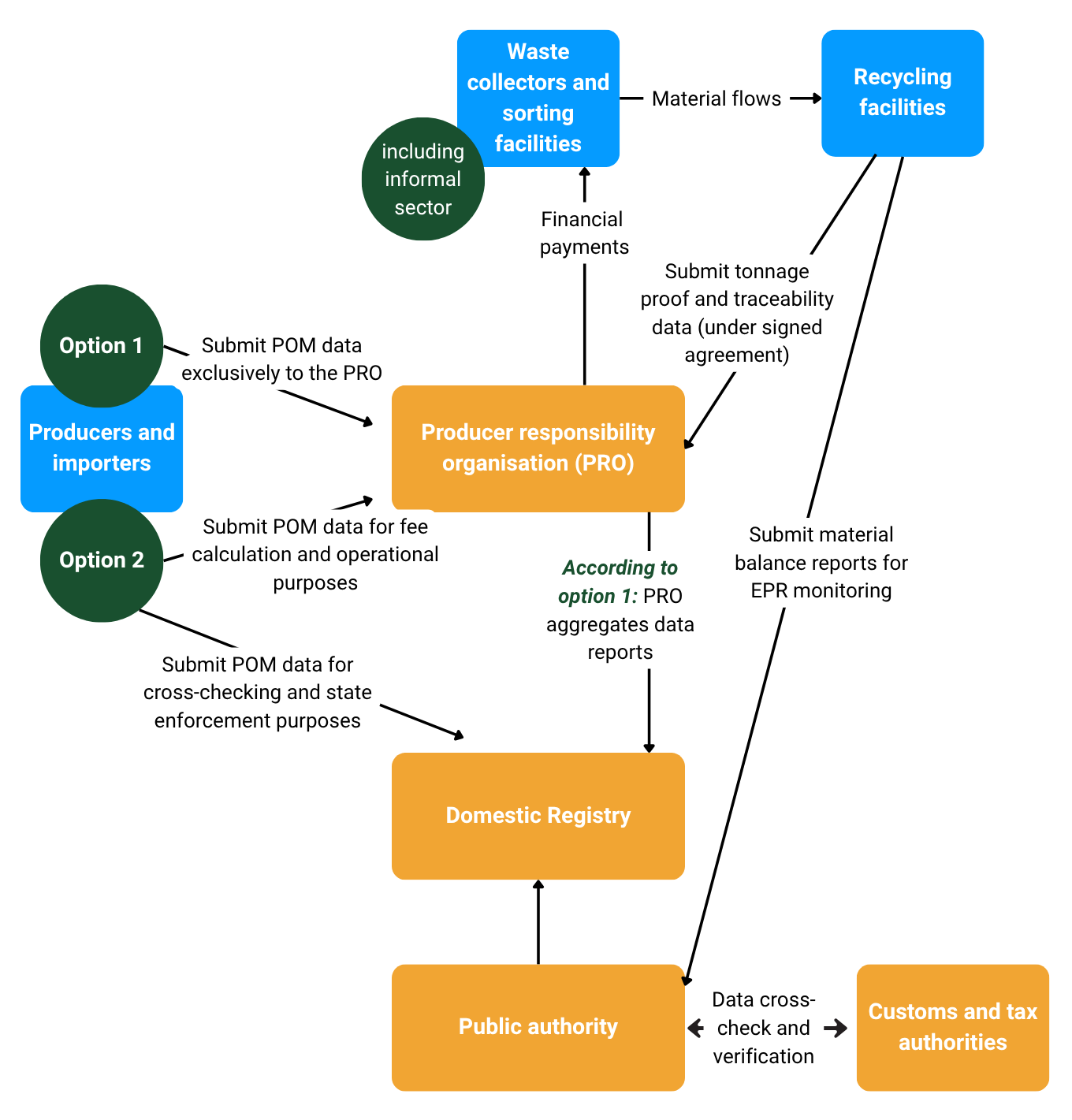
Figure 1. Harmonised EPR data flow and reporting architecture
Source: Regional Cooperation Council, Western Balkans Six (WB6) Extended Producer Responsibility (EPR) Plastic Packaging Framework (Sarajevo: Regional Cooperation Council, 2026).
WHERE THE WB6 STAND
EPR maturity across the WB6
Regional takeaway: EPR maturity falls into three groups. Kosovo* and Montenegro are classified as early-stage operational systems, with limited registry and PRO infrastructure. Albania and Bosnia and Herzegovina have established PROs and operational infrastructure, although coordination mechanisms remain underdeveloped. Serbia and North Macedonia demonstrate a higher level of operational maturity, with functioning PROs, established audit trails and advanced reporting capacity. The toolkit is therefore applied with different sequencing and levels of complexity depending on operational maturity.
| Maturity segment | WB6 | Characteristics | Flexibility package focus |
|---|---|---|---|
| Early-stage systems | Kosovo*, Montenegro | Drafting initial legislation; lacks operational registry or PRO infrastructure. | High flexibility on timelines: focus on establishing the basic registry and mandatory producer data capture rather than complex fee eco-modulation. |
| Fragmented systems | Albania, Bosnia and Herzegovina | Multiple PROs active; operational infrastructure exists but lacks coordination or a clearing house. | Flexibility on governance: priority on implementing the clearing house and data reconciliation tools to eliminate data fragmentation and cherry-picking of waste streams. |
| More mature systems | Serbia, North Macedonia | Fully operational PROs; established audit trails; advanced reporting capacity. | Flexibility on fine-tuning: advanced fee eco-modulation (bonus and malus), Deposit Return Schemes for specific streams, and optimising infrastructure for recycled-content compliance. |
Table 2. WB6 EPR maturity segments and flexibility focus
Source: Regional Cooperation Council, Western Balkans Six (WB6) Extended Producer Responsibility (EPR) Plastic Packaging Framework (Sarajevo: Regional Cooperation Council, 2026).
Domestic legal baseline for packaging EPR
Regional takeaway: Packaging EPR is established in law or under development across the WB6, but the depth of implementation varies considerably. Serbia and North Macedonia have operational EPR systems for packaging, while Albania, Bosnia and Herzegovina, Kosovo* and Montenegro are at different stages of legal and operational development. The table below summarises the principal legal instruments and current implementation status across the WB6.
| WB6 | Principal instruments | Status |
|---|---|---|
| Albania | Law No. 74/2025 on Extended Producer Responsibility (Official Gazette of Albania No. 245, 29 December 2025) and Law No. 57/2025 on Integrated Waste Management (Official Gazette of Albania No. 209, 12 November 2025) | Partial transposition of the WFD. Not yet operational: implementation is pending secondary legislation and implementing bylaws, with the EPR framework expected to become operational in December 2026. |
| Bosnia and Herzegovina | Entity-level regulations: the Federation of Bosnia and Herzegovina Regulation on packaging and packaging waste management (Official Gazette of the Federation of Bosnia and Herzegovina No. 27/23) and the Republika Srpska Regulation on packaging and packaging waste management (Official Gazette of Republika Srpska No. 24/21, 25 March 2021) | Environmental competencies are fragmented between the entity-levels, Brcko District, cantons and municipalities, with no harmonised area-wide implementation. Alignment with the SUPD and the PPWR remains incomplete. |
| Kosovo* | Administrative Instruction (GRK) No. 07/2023 on Packaging and Packaging Waste (Official Gazette of Kosovo*, 29 August 2023), as amended by Administrative Instruction (GRK) No. 04/2025 of 11 April 2025 | Emerging framework based on administrative instructions on packaging waste and single-use plastics. A new Law on Waste is under development to formally introduce EPR. A legal basis for a Deposit Return Scheme has been adopted, but no system operator has been appointed. |
| Montenegro | 2024 Law on Waste Management (Official Gazette of Montenegro No. 34/2024, 12 April 2024) and the 2025 Decree on the conditions for implementing the extended producer responsibility programme for products that become waste after use (Official Gazette of Montenegro No. 99/2025, 4 September 2025, in force as of 12 September 2025) | The legal framework shows a high degree of alignment with the WFD, the PPWR and the SUPD, including measures concerning plastic carrier bags. Implementation remains transitional while secondary legislation is being finalised. |
| North Macedonia | Law on Extended Producer Responsibility for the Management of Special Waste Streams and the Law on Management of Packaging and Packaging Waste (both Official Gazette of North Macedonia No. 215/2021, 16 September 2021). The 2021 packaging law replaced the Law on Management of Packaging and Packaging Waste of 2009 (Official Gazette of North Macedonia No. 161/2009, as amended through No. 39/2016), repealed by Article 57 of the 2021 law. | EPR for packaging waste in place since 2010 and significantly expanded in 2021 to cover seven waste streams, including packaging. The framework is broadly harmonised with EU waste directives. |
| Serbia | Law on Packaging and Packaging Waste and the Law on Waste Management (Official Gazette of Serbia Nos. 36/2009 and 95/2018) | Operational EPR for packaging waste through licensed PROs, with annual reporting to the Serbian Environmental Protection Agency and domestic recovery and recycling targets. Producers already report plastic placed on the market by polymer type, while PRO reporting is not yet polymer-specific. |
Table 3. Domestic legal baseline for packaging EPR across the WB6
Source: Regional Cooperation Council, Western Balkans Six (WB6) Extended Producer Responsibility (EPR) Plastic Packaging Framework (Sarajevo: Regional Cooperation Council, 2026).
IMPLEMENTATION ROADMAP TO 2030
Implementation is phased. In the first twelve months, priorities are the legal transposition of harmonised polymer definitions through secondary legislation, the establishment of interconnected central registries, the authorisation of at least one operational non-profit PRO in nascent markets, and the execution of data-sharing agreements between customs administrations, tax authorities and environmental ministries. Over one to three years, the focus shifts to full PRO accreditation and licensing, separate collection and automated sorting in pilot municipalities and tourism hotspots, a central, independent clearing house where competitive multi-PRO markets exist, and completed localised, necessary-cost studies to anchor fee schedules. From 2028 to 2030, advanced eco-modulation is introduced, the informal collection sector is formalised through PRO contracts, and systems fully align with the 2030 targets of the PPWR.
Key milestones to 2030
Regional takeaway: The framework maps dated milestones under GAWB Actions 19 and 22, from full PRO authorisation and an active unique registry by 2028 to PPWR-aligned packaging requirements and recycling targets by 2030.

Figure 2. Implementation phases 1 and 2 of the harmonised EPR framework
Source: Regional Cooperation Council, Western Balkans Six (WB6) Extended Producer Responsibility (EPR) Plastic Packaging Framework (Sarajevo: Regional Cooperation Council, 2026).
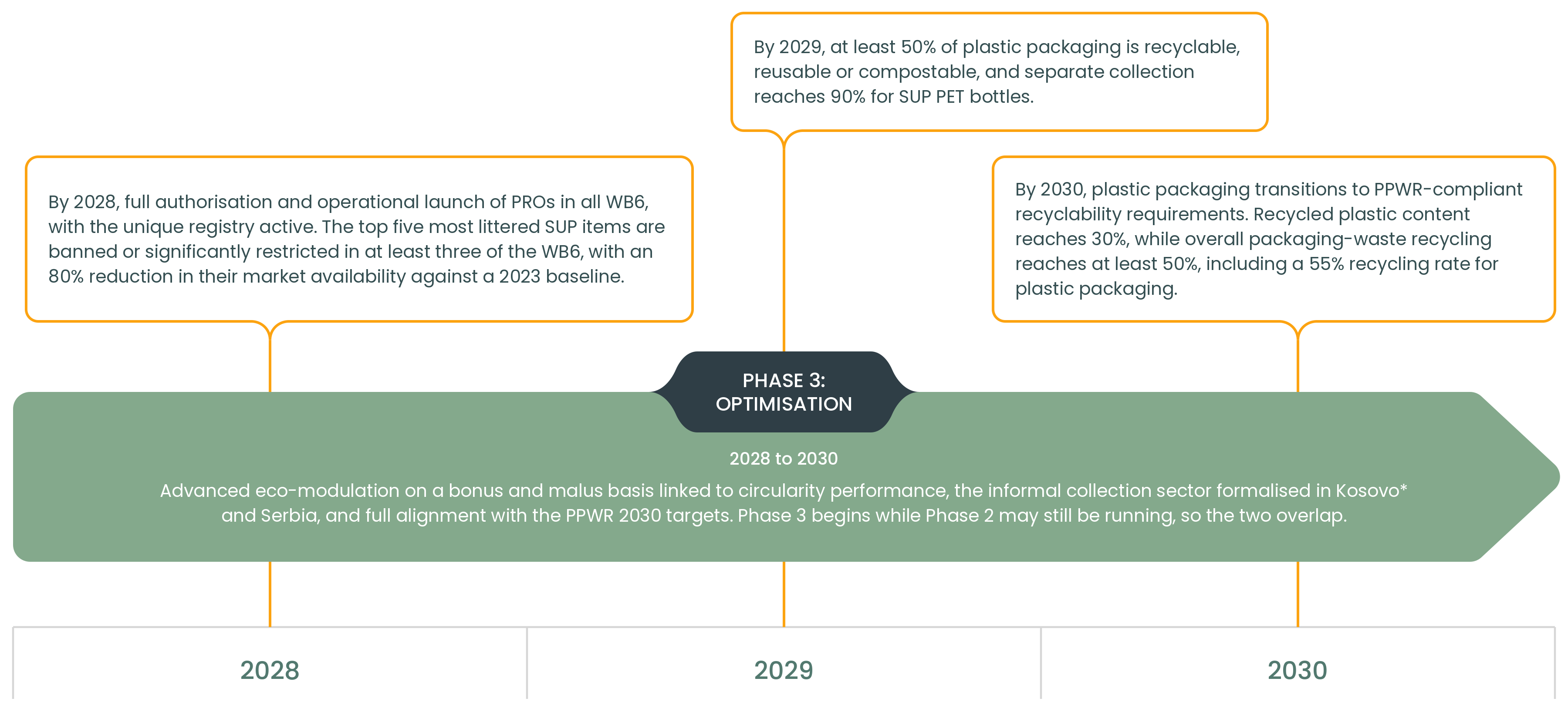
Figure 3. Phase 3 and the dated targets to 2030
Source: Regional Cooperation Council, Western Balkans Six (WB6) Extended Producer Responsibility (EPR) Plastic Packaging Framework (Sarajevo: Regional Cooperation Council, 2026).
KEY RECOMMENDATIONS
- Mandate the necessary-cost methodology so that producer financing is ring-fenced and covers at least 80% of the necessary costs of plastic packaging waste management.
- Establish a centralised electronic producer registry with unique EPR identifiers, legally linked to market entry so that no unregistered producer or importer can place packaging on the market.
- Adopt the harmonised Data Dictionary and automated data triangulation between customs, tax and environmental registries to eliminate double-counting across the WB6.
- Apply non-profit licensing criteria and mandatory independent third-party audits to all operating PROs, with audited placement data and polymer-specific tariffs published.
- Deploy standardised inspection checklists and customs-to-PRO data sharing to curb free-riding, estimated at 30% to 40% of the market.
- Use model service level agreements between PROs and municipalities to secure clean feedstock for recyclers and address infrastructure bottlenecks.