

Action 28
Increase regional cooperation in the area of alternative fuels infrastructure development
ROADMAP PROGRESS
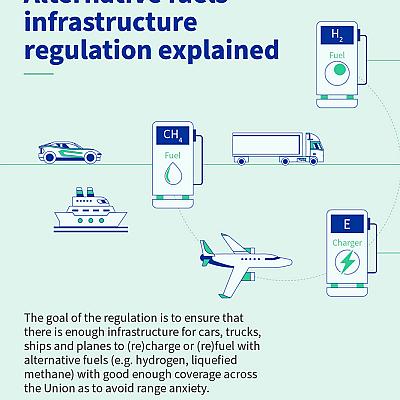
The GARI 2025 indicates that regional cooperation on alternative fuels infrastructure continued to develop from a foundational stage towards more structured policy, legislative and planning progress, although the physical network remains limited in scale. Regional cooperation in 2025 focused on legislative preparation, technical assistance and coordination mechanisms intended to enable interoperable infrastructure deployment across borders/boundaries, improve data exchange and to attract investment through aligned domestic policies.
The Transport Community Secretariat, together with partner organisations, facilitated technical workshops and peer-review exchanges involving transport and energy authorities, with the aim of aligning strategies, legal frameworks and investment priorities. Progress nevertheless remains uneven across the WB6 and is still concentrated largely in domestic policy preparation, feasibility assessments, mapping exercises and individual infrastructure projects. Concrete intraregional implementation and coordinated regional deployment remain at an early stage.
The existing network is concentrated mainly in urban areas and along limited sections of the TEN-T network. Scaling deployment across the region will require accelerated alignment with and implementation of Regulation (EU) 2023/1804, stronger integration of alternative-fuels planning into domestic transport, energy and climate strategies, improved coordination of financing instruments and investment priorities, and the development of interoperable infrastructure along core and comprehensive transport corridors.

Note: Action 28 of the first Green Agenda Action Plan (2021–2030) is not retained as a separate action in the Revised Action Plan (2025–2030). Its objectives are integrated into Action 18 of the Revised Plan, which addresses the development of WB6 policy frameworks for alternative fuels infrastructure in line with the EU Alternative Fuel Infrastructure Regulation and the Transport Community framework.
Table 16: Alternative Fuel Infrastructure in the WB6 (GARI 2025)
| WB6 | Established EV charging / alternative fuel infrastructure | Notes / progress (2025) |
|---|---|---|
| Albania | EV charging stations established (60+) | Recent installations along key routes, including border/boundary and urban nodes; integrated into a cloud system for real-time monitoring. |
| Bosnia and Herzegovina | EV charging stations established (90+) | Existing charging points largely in cities; planning for strategic deployment remains evident but uneven. |
| Kosovo* | EV charging stations established (10–20) | Limited network; early-stage plans for expansion. |
| Montenegro | EV charging stations established (40+) | Growing network; feasibility and planning for expanded deployment underway. |
| North Macedonia | EV charging stations established (50+) | Existing charging points present; further scaling planned via domestic and regional initiatives. |
| Serbia | EV charging stations established (80+) | Largest existing network in the WB6; connectivity to TEN-T corridors being enhanced. |
Source: Transport Community (TCT) Secretariat and partner organisations. Data reproduced in: Regional Cooperation Council (RCC) (2025). Report on the Implementation of the Green Agenda for the Western Balkans Action Plan (GARI 2025), Table 16. Sarajevo: RCC.