

Action 14
Decrease and gradually phase out coal subsidies, strictly respecting state aid rules
ROADMAP PROGRESS
The 2025 GARI frames the gradual phase-out of coal subsidies around energy security and social considerations, noting that the coal sector remains a significant regional employer, with an estimated 33,782 direct jobs in coal mining, 7,728 in coal-fired power plants and around 61,000 indirect jobs. In the WB6 context, phasing out coal subsidies is understood as reducing explicit or induced support that prolongs coal generation, and removing implicit support by enforcing environmental obligations under the Large Combustion Plants Directive (LCPD) and Industrial Emissions Directive.
Under the LCPD, large combustion plants either comply through a domestic Emission Reduction Plan (NERP) pathway or operate under a time-limited opt-out regime. Where opt-out limits are disregarded or NERP emission ceilings are persistently breached, the resulting regulatory forbearance functions as a subsidy-like advantage. The 2025 GARI reports continued widespread non-compliance with emission ceilings across the region, and notes that large combustion plants remain the main source of GHG emissions, accounting on average for 59% of electricity generation. Non-compliance increases operating costs and reduces plant efficiency, while CBAM is expected to place further pressure on generators’ revenues and create stronger incentives for investment in emission reductions or plant closure.
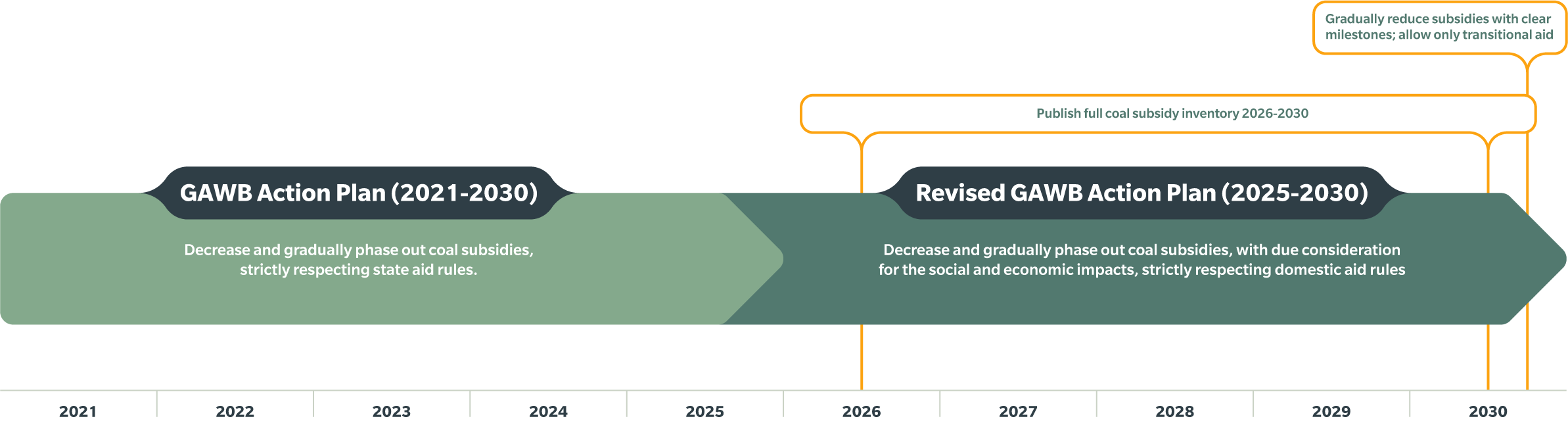
Note: Action 14 of the original Green Agenda Action Plan (2021–2030) is carried forward into the Revised Action Plan (2025–2030) through strengthened provisions on the decarbonisation of the power sector and alignment with EU state-aid and carbon-pricing frameworks. The revised roadmap links the gradual phase-out of coal subsidies to NECP implementation, electricity market reform and preparation for EU Emissions Trading System alignment and/or introduction of alternative carbon pricing instruments, ensuring consistency with Energy Community obligations.
Figure 3: Electricity prices for household consumers, first and second half 2025 (EUR per kWh)
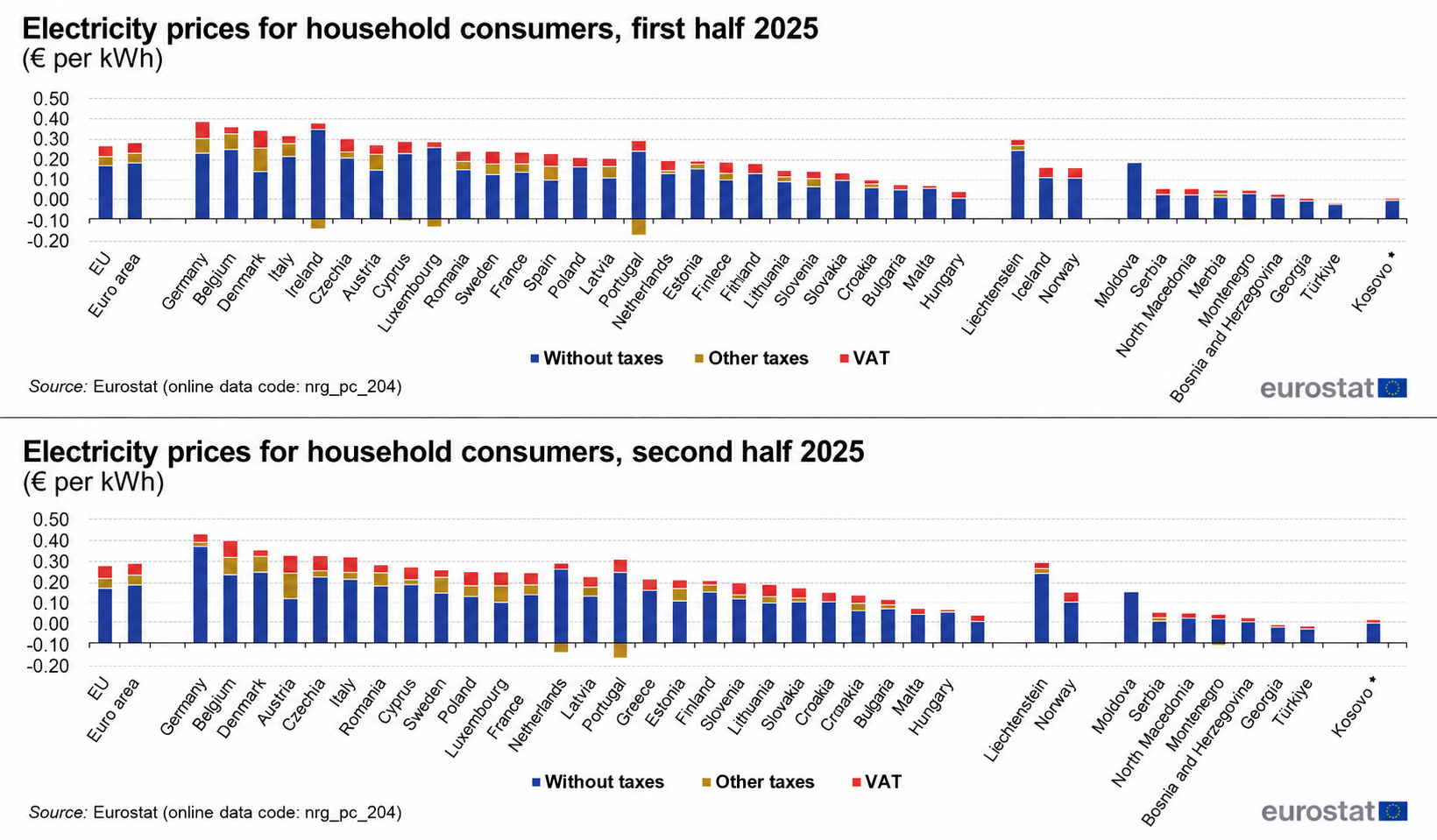
Source: Eurostat (online data code: nrg_pc_204), reproduced in Regional Cooperation Council (RCC) (2025) Report on the Implementation of the Green Agenda for the Western Balkans Action Plan (GARI 2025), Figure 3. Sarajevo: RCC.
Note: figures reproduced as published, for band DC, annual consumption 2 500 to 4 999 kWh
Source: Energy Community Secretariat (2024) Annual Implementation Report of the Acquis under the Treaty Establishing the Energy Community, November 2024. Data compiled in Regional Cooperation Council (RCC) (2024) Report on the Implementation of the Green Agenda for the Western Balkans Action Plan (2024 GARI), Table 2.2.13.
Source: Energy Community Secretariat. Data reproduced in: Regional Cooperation Council (RCC) (2025). Report on the Implementation of the Green Agenda for the Western Balkans Action Plan (GARI 2025), Table 11. Sarajevo: RCC. Note: Albania’s single plant is not in operation.
Figure 4: Emissions by sector in WB6
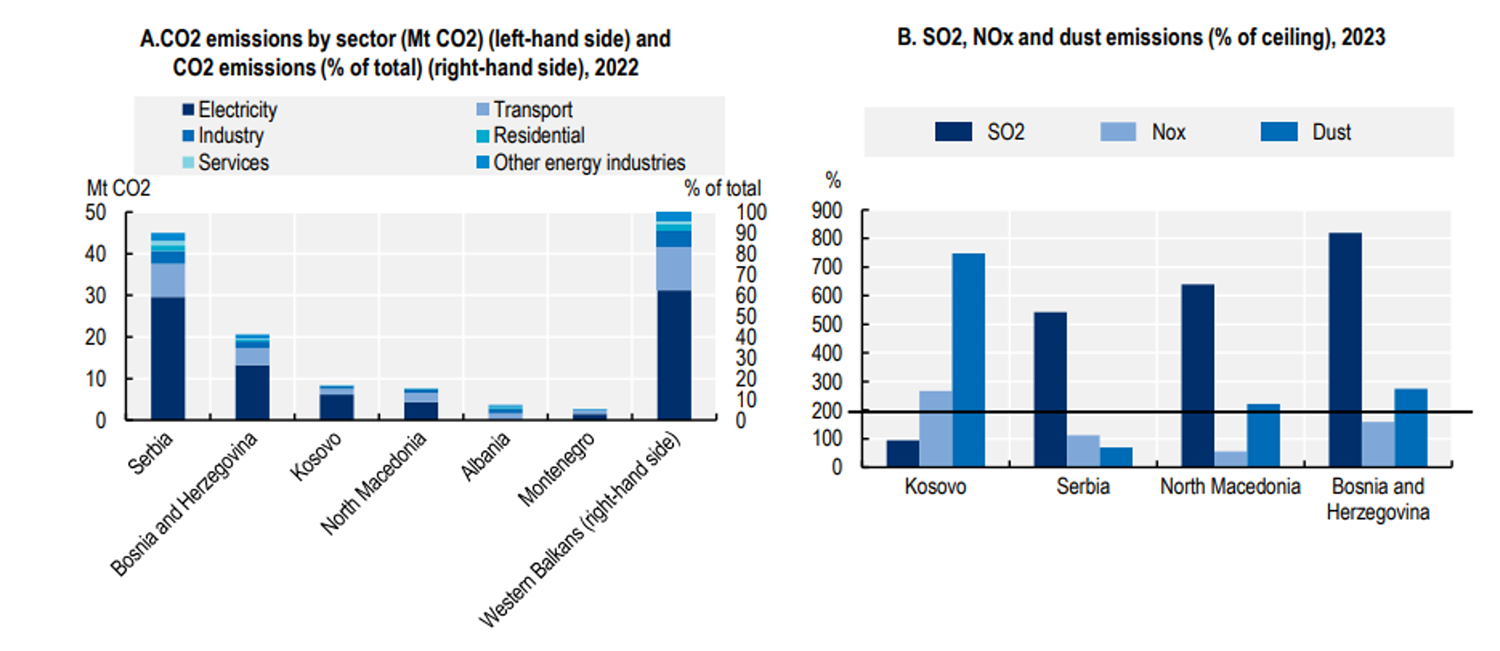
Source: Data reproduced in: Regional Cooperation Council (RCC) (2025). Report on the Implementation of the Green Agenda for the Western Balkans Action Plan (GARI 2025), Figure 4. Sarajevo: RCC.